

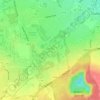
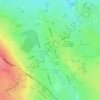
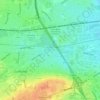
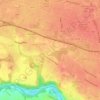
Mapa topográfico Castleknock
Haga clic en el mapa para ver la altitud.
Castleknock
As the word Castle did not come into use in Ireland until Norman times we know that Castleknock is a name of comparatively recent origin. Documents from the 12th and 13th centuries refer to the place as Castrum Cnoc, simply Cnoc and also Chastel-cnoc or Castel-Cnoc. So it seems that the name Castleknock is rooted in the topography of the hill or cnoc located at the centre of the modern neighbourhood and/or the personal name of the mother of a semi-legendary High King i.e. Cnucha and the building of a castle by Normans on this site in the 12th century.
Acerca de este mapa

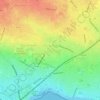
Nombre: Mapa topográfico Castleknock, altitud, relieve.
Altitud media: 55 m
Altitud mínima: 7 m
Altitud máxima: 98 m
Otros mapas topográficos
Haga clic en un mapa para ver su topografía, su altitud y su relieve.

Lambay Island
Lambay Island is the largest island off the east coast of Ireland. It covers about 2.5 km2 (0.97 sq mi). The highest point – a hill known as Knockbane – rises to 126 m (413 ft). The island's high ground lies to the east and aside from Knockbane includes Heath Hill and Tinian Hill, and in the extreme…
Altitud media: 14 m





Baldoyle
Ireland > County Dublin > Sutton
A description of Baldoyle from Lewis's Topographical Dictionary of Ireland (Dublin, 1837) gives a useful summary of what was then a substantial rural fishing village.
Altitud media: 2 m


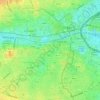
Dublin Castle
Ireland > County Dublin > Dublin
The Poddle was diverted into the city through archways where the walls adjoined the castle, artificially flooding the moat of the fortress's city elevations. One of these archways and part of the wall survive buried underneath the 18th-century buildings, and are open for public viewing.
Altitud media: 16 m


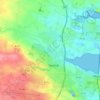
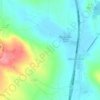
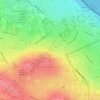
Swords
At the northern end of the street stands Swords Castle, 200m northeast of the ecclesiastical site, which was built in the early 13th century. A short distance north of the castle is the elevation known as Spittal Hill, where a hospital once stood.
Altitud media: 24 m



Lambay Island
Lambay Island is the largest island off the east coast of Ireland. It covers about 2.5 km2 (0.97 sq mi). The highest point – a hill known as Knockbane – rises to 126 m (413 ft). The island's high ground lies to the east and aside from Knockbane includes Heath Hill and Tinian Hill, and in the extreme…
Altitud media: 14 m